
Bench Warrants in Hillsdale County
A bench warrant is a judge's tool for someone who skipped out on what the court required. Missing an appearance is the usual trigger in Hillsdale County, though unpaid obligations and ignored court orders can bring the same result. The vocabulary here is simple. Michigan's published criminal rules use the term bench warrant, and no state or local source labels it a capias, so the words that matter are bench warrant and the failure to appear behind it. Who signs one is just as fixed. Only a judge can, because the Michigan District Court Magistrate Manual states that a magistrate is not authorized to issue a bench warrant. That line matters locally, since the same office handles plenty of other judicial work in Hillsdale County.
The 48-Hour Rule and When a Hillsdale County Judge Can Act Sooner
Michigan Court Rule 6.103 controls what happens after a criminal failure to appear. Miss a required date and the court may issue a bench warrant. For a first failure, the rule usually waits 48 hours first. That pause is thin protection. The rule carves out exceptions, and they are broad ones. Assaultive crimes qualify. So does domestic violence, a prior failure to appear, or any case where the court finds that waiting raises the risk of harm or of another no-show. A Hillsdale County judge applies the rule to the facts on the record, so timing in one case can differ sharply from another. Treat the 48 hours as a default, not a promise about any specific Hillsdale County matter. Note: The same rule requires that a person arrested on the warrant be brought before the court without unnecessary delay.
How a Hillsdale County Bench Warrant Is Issued
A bench warrant starts inside the court's own file. There is no fresh complaint for a judge to weigh, the way an arrest warrant demands, because the case is already open and the missing piece is the defendant's appearance. Most local bench warrants trace back to the 2B District Court, the lower court for Hillsdale County. Its jurisdiction reaches misdemeanors, traffic, ordinances, civil infractions, small claims and felony preliminary examinations. The District Court office is the published contact for that docket. The court's own page lists the office address, hours, jurisdiction and case-access links a person needs when a bench warrant looks likely.
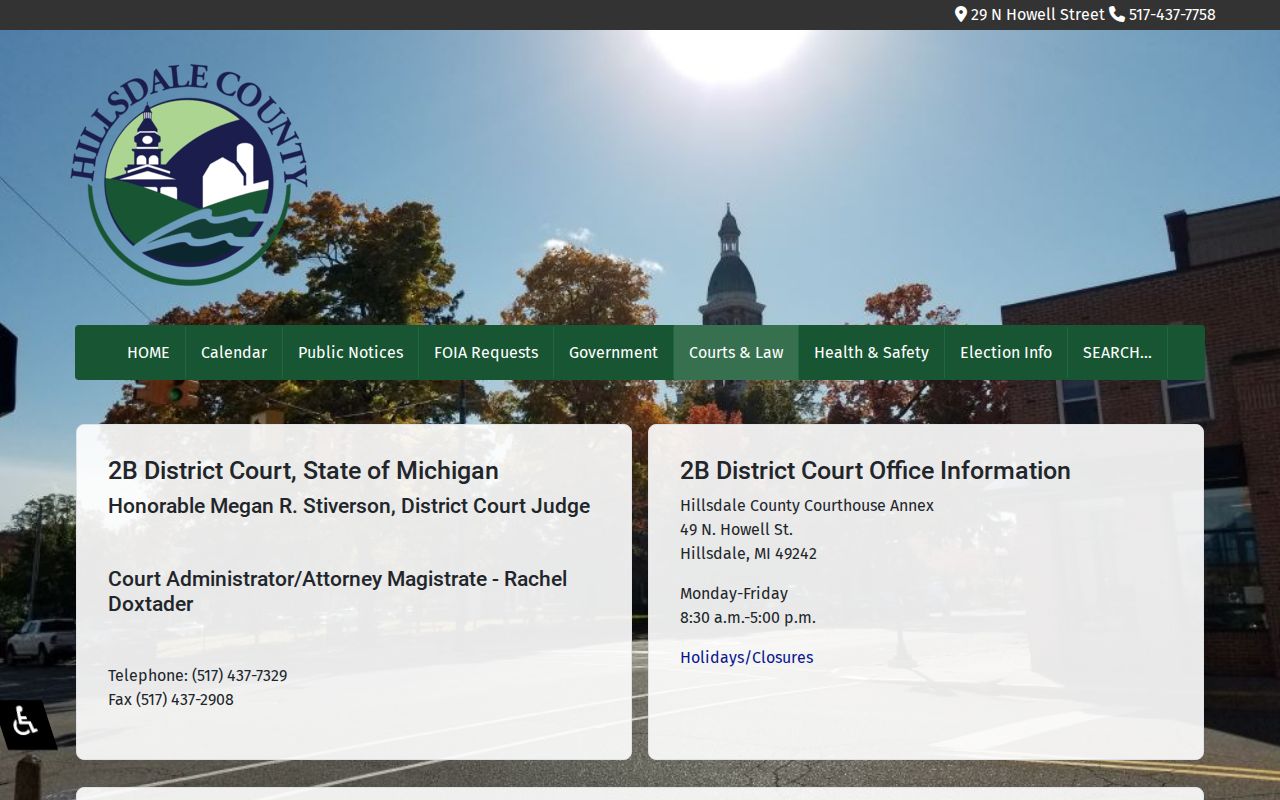
A bench warrant in Hillsdale County starts with a judge, not a police complaint. The District Court bench issues them when a hearing or a payment deadline is missed. A Circuit Court judge signs the same kind of process in felony, family and larger civil matters. The family division handles contempt questions through its own channel, and the court page lists the office address, hours, jurisdiction and case-access links a person needs.
Bench Warrants Across the Hillsdale County Courts
Four courts or court offices in Hillsdale County can issue a bench warrant. Each keeps its own file, so the issuing court is the place to ask.
| Matter | Issuing Court | Published Route |
|---|---|---|
| Misdemeanor failure to appear | 2B District Court | 49 N Howell Street, 517-437-7329 |
| Traffic or ordinance failure to appear | 2B District Court | Same office, or the state ticket search |
| Felony preliminary examination | 2B District Court | Same office, with the case number |
| Felony trial or circuit appearance | 1st Circuit Court | 29 N Howell Street Room 6, 517-437-4321 |
| Family or child-support contempt | Circuit family channel and Friend of the Court | 15 Care Drive, 517-437-4111 |
Juvenile matters follow a closed record route in Hillsdale County. A juvenile file is never resolved through a public case search.
Bench Warrant vs Arrest Warrant
Both kinds of warrant can end in an arrest, but they answer different questions. An arrest warrant asks whether a judicial officer authorized custody based on a complaint. A Hillsdale County bench warrant asks something else. It asks whether a person failed to appear or to comply after the case was already in court.
| Point | Bench Warrant | Arrest Warrant |
|---|---|---|
| Trigger | Missed appearance or a violated court order | Sworn complaint and probable-cause review |
| Who signs | Judge | Judge or authorized judicial officer |
| Case status when issued | Already in court | New process in the case |
| Usual resolution | Appearance, recall motion or compliance | Arraignment, bond and case defense |
Both kinds of warrant can land a person in custody. They just answer different questions. An arrest warrant asks whether a judicial officer authorized custody based on a complaint. A bench warrant asks whether someone in an already-open Hillsdale County case failed to appear or comply.
Missing Your Hillsdale County Court Date
A missed date needs action, not an explanation. In Hillsdale County, start with the court record and go from there.
- Find the notice and write down the court, the case number, the date you missed and the reason the court listed.
- Open the matching case search and read the current entry, keeping in mind that some cases are not displayed.
- Call the court office when the entry is missing or unclear, and ask whether a bench warrant is in the file.
- Ask what the court requires next: an appearance, a payment, proof of compliance, a filing or counsel.
- Ask for the answer in writing, including the date, location and any document you must bring.
- Verify afterward that the court entered the action you completed, because a payment does not by itself remove a warrant.
A lawyer can take those middle steps off your plate. If your Hillsdale County case is criminal, that help usually pays for itself before you walk in.
How to Resolve a Bench Warrant
Michigan practice gives you three ways to deal with a bench warrant. Showing up on your own at the issuing court is the path the rules spell out most fully. Posting bond, on whatever terms the court sets, settles the question of release while the case moves. A motion to recall or quash the warrant goes after the warrant itself. Hillsdale County judges see all three, so pick deliberately. The rule behind voluntary appearance is Michigan Court Rule 6.105. Anyone named on a bench warrant or arrest warrant may go to the issuing court within one year. If the judge is available, arraignment happens within two hours. If not, the court recalls the warrant and sets a later date. Before counting on that sequence, ask the local clerk how the office actually applies the rule, because a Hillsdale County courtroom may run it differently than the page of the rule suggests.
Caution: A bench warrant does not pause the case. It can add release conditions after an arrest and, in a traffic matter, a license consequence under MCL 257.321a.
Ask the Hillsdale County court which path fits your file. Also ask what the court wants first, the appearance or the paperwork.
Hillsdale County Bench Warrant Myths
Some common assumptions about bench warrants do not survive contact with the local record.
- A jail list is not a bench-warrant list. The booking interface shows current custody and listed appearances.
- A blank case search does not prove that no warrant exists, because Hillsdale County warns that some cases are not displayed.
- A magistrate does not sign these warrants. The state manual reserves that step for a judge.
- Paying a ticket does not automatically recall a warrant, because payment eligibility and recall are separate court actions.
- A caller who knows a name and a case number is still not proof of anything, given the warrant scam the Sheriff warned about in 2024.
Every one of these Hillsdale County myths ends the same way. Read the court's own record, then get the action confirmed in writing.
Which Hillsdale County Court Issued It
The name on your notice tells you where the answer lives. Unsure? The case number sorts it out fastest. That number belongs to one Hillsdale County court and one file.
Request court records from the court itself, not through the county's general records process. Hillsdale County policy keeps the courts outside that public-records procedure.
Family, FOC and Juvenile Bench Warrants
Child-support enforcement in Hillsdale County runs through the Friend of the Court. That office keeps its own address, information line, and records request route, separate from the criminal side. A support matter that reaches contempt is a family file, not a criminal docket. The family-support office publishes its own access notice for those records.
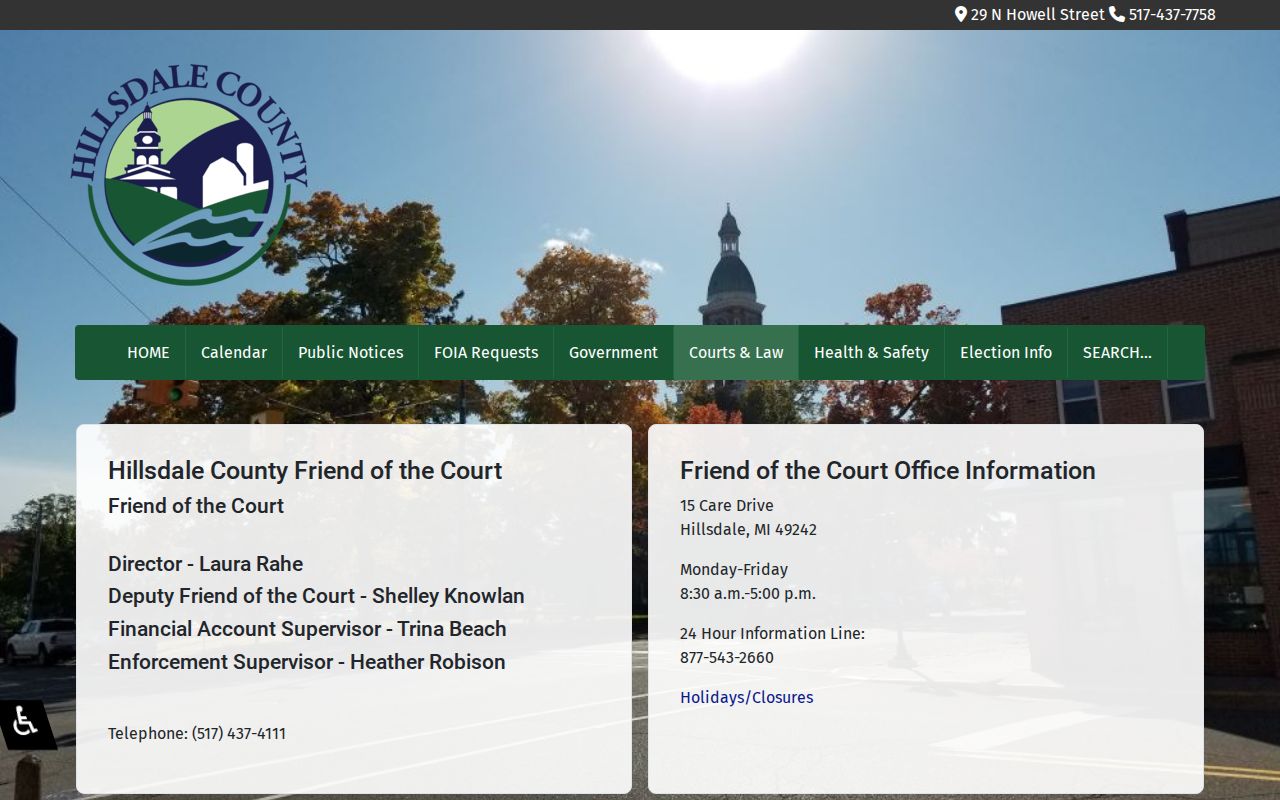
Family Division files sit apart from criminal case searches in Hillsdale County. A notice posted by the office explains why. That is also why the Friend of the Court handles its own record requests. Juvenile files face an even stricter rule. They stay closed to the public, so a juvenile warrant matter needs a legitimate interest or a court-authorized route, not a public page.