
Arrest Warrants in Hillsdale County
Behind every Hillsdale County arrest warrant sits a sworn complaint. The warrant itself is judicial process: it empowers a peace officer to arrest an accused person and bring them before the court. It is not a list. It is not a database entry either. Michigan Court Rule 6.102 lets a judge issue a warrant rather than a summons in certain circumstances, among them assaultive allegations, domestic violence, a risk the person will not appear, public-safety concerns, or a prosecutor's request. The charge decides the starting court in Hillsdale County. Misdemeanors and felony preliminary examinations belong to the 2B District Court. Felony trials belong to the 1st Circuit Court. One arrest can touch both courts at different stages.
From Complaint to Signature in Hillsdale County
A Hillsdale County warrant record builds step by step. Each step leaves its own trace for anyone running a warrant check.
- A sworn accusation or complaint is prepared by a complainant, an officer or a prosecutor.
- A judge or authorized judicial officer reviews the basis for a summons or a warrant.
- The warrant states the offense and the command to arrest, and it carries the judicial signature.
- A peace officer receives and executes the process, or the process remains unserved.
- The person is brought before the court without unnecessary delay after the arrest.
- The court addresses the charge, counsel and bail, and the case continues on its own schedule.
- The warrant may be returned, recalled, stayed or otherwise resolved in the file.
One case search can show a single step and hide the rest. That gap trips up plenty of warrant checks. Ask the Hillsdale County court office what the file holds today.
What a Hillsdale County Arrest Warrant Contains
What goes into a warrant? Michigan law sets the list. Hillsdale County publishes no sample warrant, so the field list below follows MCR 6.102 and MCL 764.1b instead.
| Accused name or description | Identifies the person to be arrested by name or by description. |
|---|---|
| Offense or accusation | States what is alleged. An accusation is not a conviction. |
| Issuing court and judge | Names the judicial source and the office that keeps the file. |
| Peace-officer direction | Authorizes execution by a peace officer. |
| Bring-before-court command | Connects the arrest to a prompt arraignment. |
| Signature and date | Judicial authorization and the start of the timeline. |
| Interim bail, if stated | An initial release direction. The current amount is a court decision. |
| Return or execution entry | What the officer reported back to the court. |
Hillsdale County felony and family files have one published home. The Circuit Court's page is that entry point for those case records.
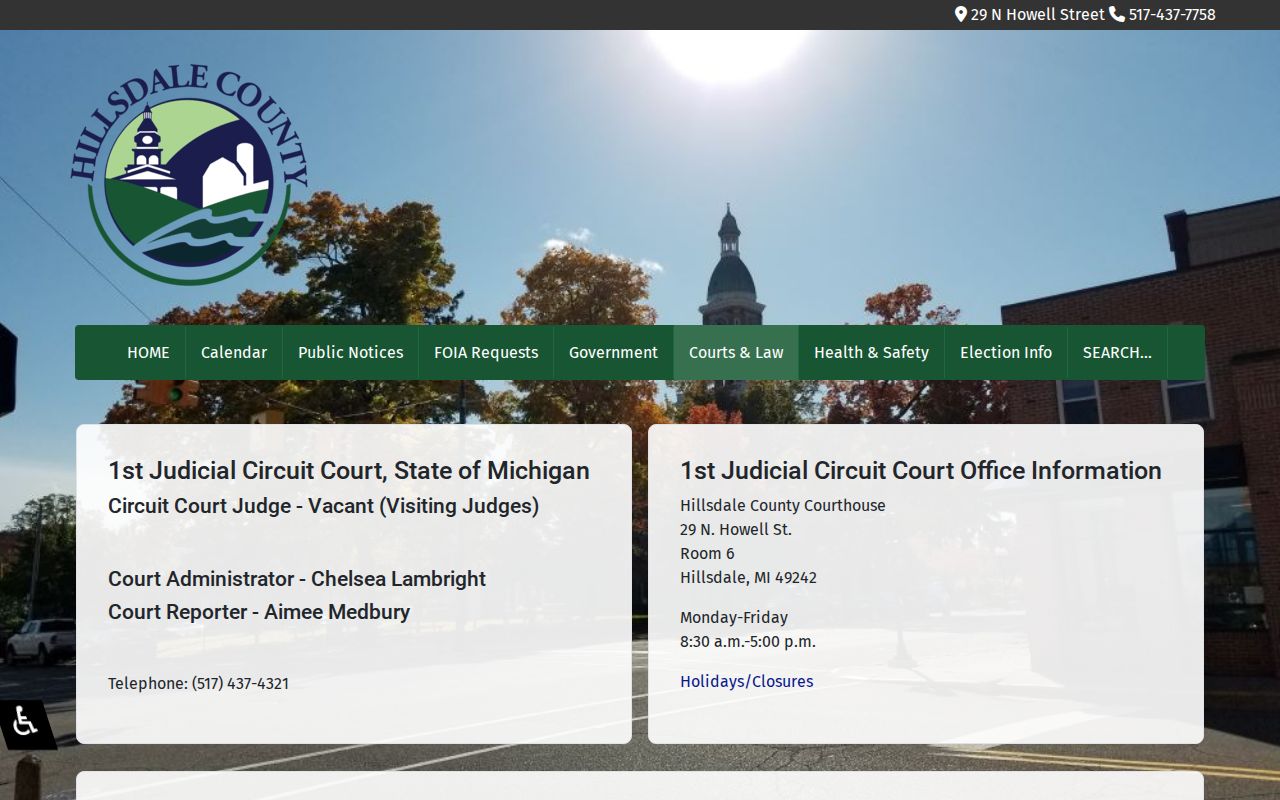
A felony arrest-warrant question in Hillsdale County follows this route. The page lists the office, the personnel, the hours and the case-lookup path.
Where a Hillsdale County Felony Case Goes After Arrest
Hillsdale County splits felony work by stage. The 2B District Court runs the preliminary examination. There the judge decides whether the case moves ahead. If it does, the 1st Circuit Court takes the trial.
| Stage | Court | What Happens |
|---|---|---|
| Misdemeanor charge | 2B District Court | Arraignment, bail, trial and sentencing in the lower court |
| Felony preliminary examination | 2B District Court | The court reviews whether the case proceeds |
| Felony trial | 1st Circuit Court | General-jurisdiction trial and sentencing |
| Family or protection order | Circuit Court family channel | Civil and family process, separate from a criminal docket |
One arrest can spawn two case numbers in two courts. Search only one Hillsdale County endpoint and the record looks incomplete.
How Hillsdale County Arrest Warrants Are Served
In Hillsdale County, a peace officer executes an arrest warrant, and that officer is usually a Sheriff's deputy. The Sheriff's divisions are Patrol, Operations, Investigation and Corrections. No separate warrant unit appears in county material. Service can happen at a traffic stop, at a home, at the courthouse, or at the jail. Heading to a hearing? The District Court posts visitor rules that apply to every person who walks in, defendant and spectator alike, and its published page spells them out.
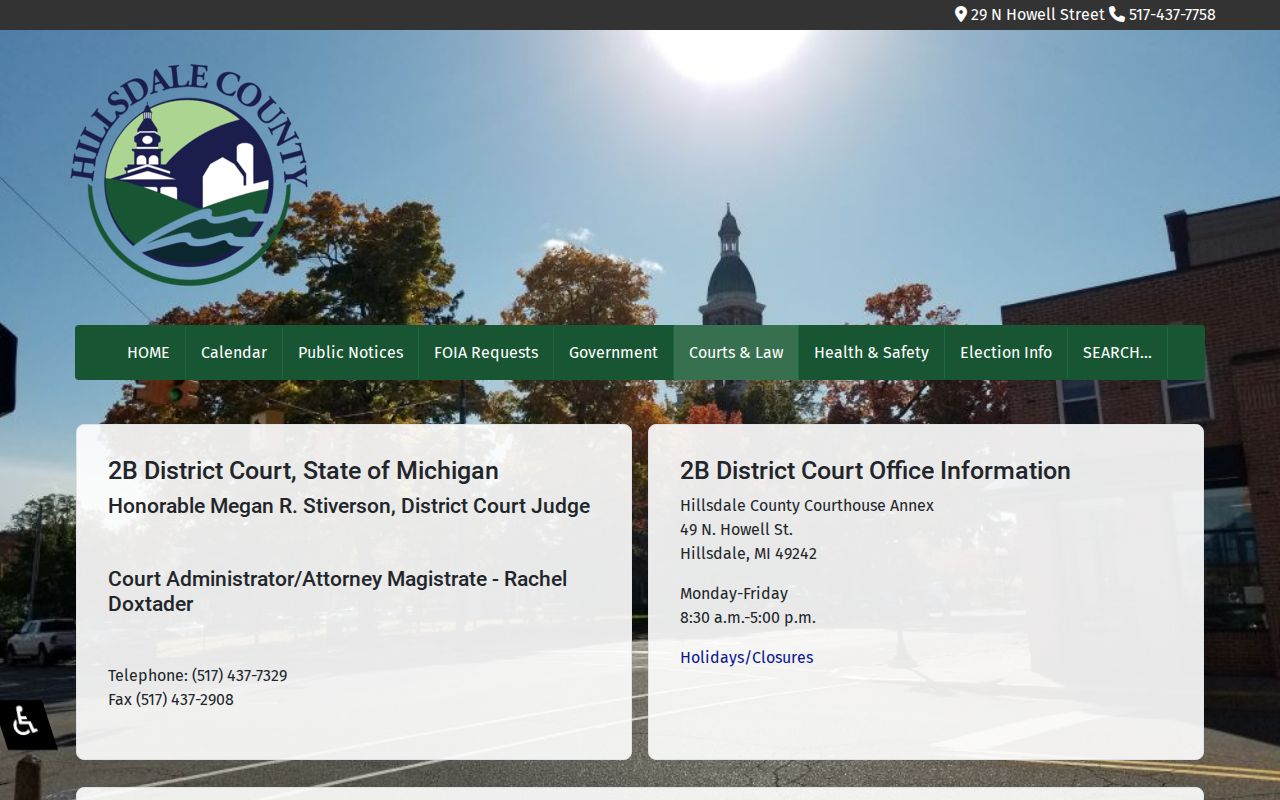
Those courthouse rules cover clothing, bags, food, phones and accommodation requests, and they reach a person attending their own hearing as much as any spectator. After an arrest, the person goes to the Hillsdale County jail at 165 W Fayette Street. Under MCR 6.104, the court must bring them before a judge without unnecessary delay. The jail holds the person. The court settles the legal status. Those are separate jobs, and each office keeps its own record.
Bond, Bail and Release in Hillsdale County
Only the court can set or change bond, and it does so case by case. No fee schedule will give you a personal amount. MCR 6.106 governs bond conditions and forfeiture. Miss a condition or a court date, and further process can follow. The Hillsdale County jail's services page lays out the payment routes. Online bail runs through a payment route that charges a nonrefundable service fee and takes major cards. A lobby kiosk takes payment too. A separate number handles inmate deposits. Check which route the Hillsdale County court wants before paying anything. The Circuit Court and District Court pages both link approved-bond resources, so a court-approved surety question goes there. Posting bond does not erase the duty to appear. It also does not recall a warrant on its own. Note: A caller demanding immediate bond by gift card, wire transfer or cryptocurrency is not using any court channel.
Arrest Warrant vs Summons vs Bench Warrant
The three processes look similar on a docket line and behave differently in practice.
| Point | Arrest Warrant | Summons | Bench Warrant |
|---|---|---|---|
| Starting event | Complaint and probable-cause review | Complaint, with the court choosing appearance over arrest | Missed appearance or violated order |
| Immediate custody | Authorized | Not directed | Authorized |
| Who issues | Judge or authorized officer | Judge or authorized officer | Judge |
| First step for the person | Arraignment after arrest | Appear as directed | Appearance, compliance or recall motion |
Skip a summons and the case does not just sit there. The same failure-to-appear consequences kick in. That is often what turns into a Hillsdale County bench warrant. The starting paper differs; the ending risk does not.
Search Warrants and Arrest Warrants Are Different Records
A search warrant and an arrest warrant are different records. One lets officers search a described place or property for specified things. The other puts a person in custody. Keep the two straight. A name can sit in an investigation file with no arrest warrant existing for that person at all. Michigan law allows a judge to suppress a search-warrant affidavit when an ongoing investigation, privacy or safety is involved, so those files stay harder to see than a docket entry. Hillsdale County detectives say they obtain search warrants while working cases. The office publishes no index of them. Ask an attorney about copies, inventories or access rather than inferring that a person is wanted.
What to Do If There Is a Warrant for You
Act now, on your own schedule. A Hillsdale County warrant does not wait politely, so get to the issuing court before an officer comes to you. Voluntary appearance, posting bond on the court's terms, or a motion to recall or quash the warrant are the recognized paths.
Important: Talk to a Michigan attorney before turning yourself in. Counsel can arrange the appearance, address bond and protect your rights during arraignment.
Michigan Court Rule 6.105 gives a person named on an arrest or bench warrant one year to walk into the issuing court. If the judge is available, arraignment happens within two hours. If not, the court recalls the warrant and sets a new date instead. Practice differs from courthouse to courthouse. Ask the Hillsdale County court office how it handles appearances. The steps for handling a warrant on the home page list the same options in the order people usually try them.
Warrant Scams and Impersonation in Hillsdale County
A Hillsdale County caller who recites your name, a case number, or a charge still may not be from a courthouse. The Sheriff's office warned in November 2024 that scammers were phoning people, claiming a warrant was active, and demanding bond money on the spot. Real warrant information is handled in person, never over the phone. So hang up. No genuine office in Hillsdale County asks for gift cards, wire transfers, cryptocurrency, or an unsolicited card payment to clear a warrant. Urgency is the scammer's tool. Look up the court or Sheriff number yourself and call the published line to check. Treat text messages and emails carrying a case number the same way: skip any link they push, and use the county and court sites directly instead.